A Wrinkle in Teaching: a Tesseract from 1990 to 2026
Posted
I may have mentioned this before, but I am in my 35th year of teaching. I have seen a lot of education history. I know others have seen even more, but I have taught long enough to see virtually everything change around me.
I began teaching in 1990, before I was married or had kids, ten years before Mr. Fitz, my comic strip teacher, launched his career. I found myself imagining something today. I imagined removing, or covering up, those middle years – 1991 to 2025 – and simply placing 1990 and 2026 right next to each other rather like Mrs. Whatsit explaining a tesseract to the kids in A Wrinkle in Time by folding her robe and touching two points of fabric together.
In 1990 there were no high-stakes tests. There were no standards. When I began my career I was hired to teach 10th graders in a program called “Writing Enhancement”. Total class-loads for each English teacher in the program were 125 students maximum; that’s part of why I was hired, because some teachers’ student loads were too big. I was a “rover.” I traveled with a cart to four classrooms and two portables.
We were encouraged to teach “Nancy-Atwell-Style”: reading workshop on Mondays and Fridays, book-ending the week, and writing workshop Tuesday through Thursday.
Reading workshop involved students choosing their own books from the library or teacher classroom libraries. In a composition notebook, students wrote me letters about the books they read; I wrote back. We had conversations. Students kept track of what they read. I forget exactly where the books came from. I think I traveled with a box of books on the lowest level of my cart, books I’d cobbled together from used book shops on my own very limited dime. The goal was to help s become lifelong readers. I recall students enjoying reading time, enjoying books. If that doesn’t help turn them into readers, not much will. Those 10th graders are now in their early 50s. I don’t think I’ll be able to find them to ask if they still read – but no one could say they weren’t encouraged.
No one, no parent, no administrator, no one from the state ever challenged any of the books my students read. It just never came up. I looked books over to make sure there was nothing too dreadful in them, but kids pretty much read what they wanted. Stephen King was, as always, popular.
Writing workshop involved students behaving like real authors. After a mini-lesson on some aspect of writer’s craft, student plowed ahead writing things that mattered to them and were encouraged to experiment with different genres: fiction, genre fiction, poetry, essays, plays, comics… the list is endless. What they were not told to do was write to a template and comply as writers. They had rich conversations with each other and with me about their writing, about what made it work and what needed work. Rubrics had yet to rear their standardized heads and make writing all about the grade. Writing was about the writing. Student voice mattered. They learned that they had things to say, and that what they had to say mattered to their peers and to the adults in the building.
We did the Atwell workshop model most of the time, but we also did some shared texts with discussion, like Shakespeare plays, Steinbecks’ The Pearl, and Fahrenheit 451. The point of reading a book together was both to challenge students and enrich their understanding, but to also have real discussions about what the book meant to students.
Literacy was real. It was about life, about having a voice, about discovering reading as entertainment and wisdom, about civic discussion and debate. Reading and writing were linked: reading was inhaling, writing was exhaling.
Apparently there were people who didn’t like those things.
Now let’s fold Mrs. Whatsit’s robe and take a tesseract to today.
Nancy Atwell is history where I teach. Every single text we teach must supposed to be approved because every book is under suspicion. Reading workshop is discouraged in most schools from what I hear. There is not enough control. Reading is not about entertainment, wisdom, life, or civic discussion and debate. Reading is about using brief, approved texts and excerpts of texts to skill and drill students in benchmarked aligned questions. The goals is to raise test scores in order to raise school and district grades. The state apparently wants to drive classroom libraries out of existence. An inappropriate book in your classroom can get you charged with a third-degree felony.
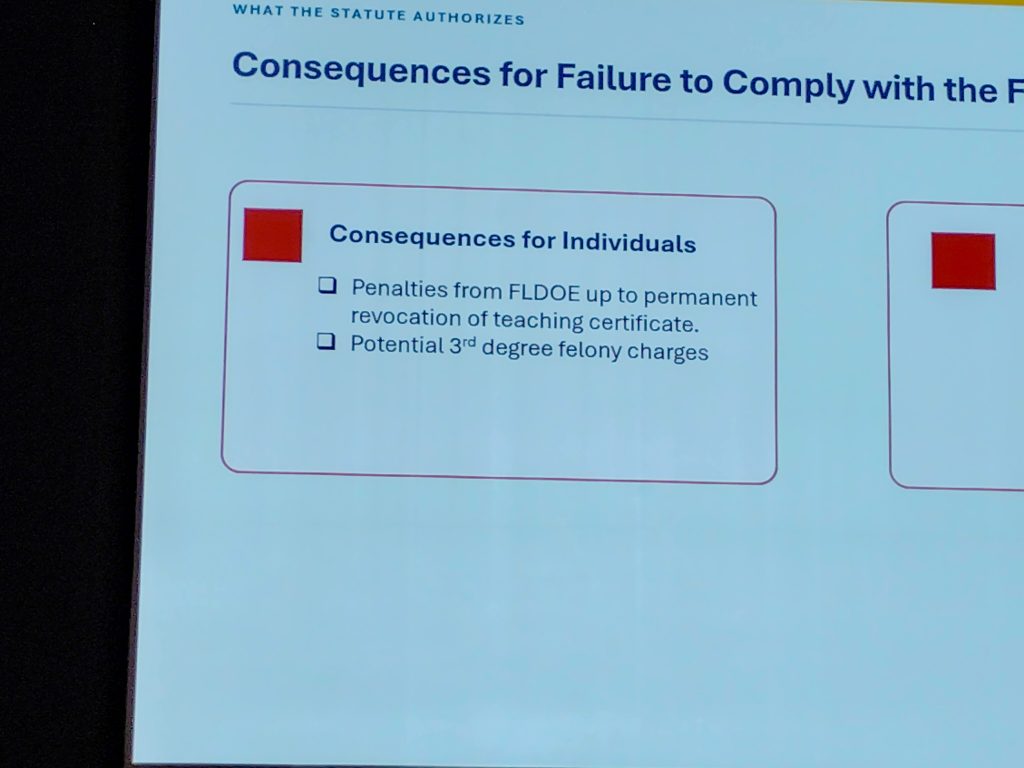
District staff just came to our media center (testing center?) and removed over 300 books on the state’s instruction. We do not encourage life-long reading. Our constant test-prep followed by constant testing (this quarter alone we gave a state test, a textbook mid-quarter assessment, and a district assessment) seems to me to be a pretty concerted effort to ensure students never want to read again. The effort appears to be working: reading rates in America are at an all-time low. Interestingly, so are reading scores. Perhaps the best way to raise scores is to stop worrying about them and just let kids read a lot.
Writing is essentially also history. In contrast to the Writing Enhancement Program, we now have exactly four weeks of isolated writing instruction that is test prep for the state writing test. The writing test involves reading three articles, writing to a prompt, and stringing quotes from the articles together to create a formulaic essay that students don’t care about. No voice. No choice. No encouraging students to enjoy, find meaning in, or experiment with writing. It is just a boring task to get done as soon as humanly possible. No wonder some of them chat-bot it. There is a writing test so the state can say it cares about writing, but the test doesn’t count toward school or district grades, so no one who is working to raise those grades instead of working to help students flourish will care about writing.
And speaking of chat-botting it, the district is a constant font of A.I. generated content (emails, digital posters and tiles, animations) used to tout how wonderful they are. They are sending a very clear message: human art and writing don’t matter because the algorithm can do it faster by stealing from real human writers and artists.
I started in a literacy-rich system that valued reading and writing for their contributions to human flourishing, that encouraged lifelong reading and writing, that encouraged creativity and experimentation, reading and writing widely; here near the end of my career reading and writing are actively discouraged while students are tested on their ability to do them well.
I don’t think 35 years of education reform has improved our schools. I think it has purposefully tried to ruin the good our schools were doing. It think the people behind all of this never wanted a literate populace. I think they wanted to destroy literacy in the name of improving it.
Welcome to 2026. I’d like to take a tesseract to 1990 and bring that kind of teaching back.
By the way, A Wrinkle in Time is frequently banned.